DJI · Cinema Camera Gimbal
DJI Ronin 4D
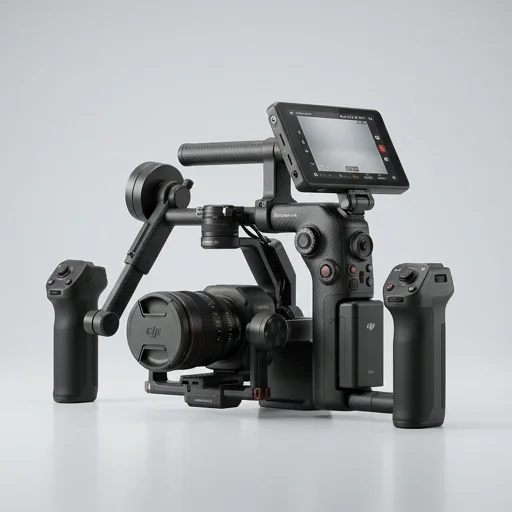
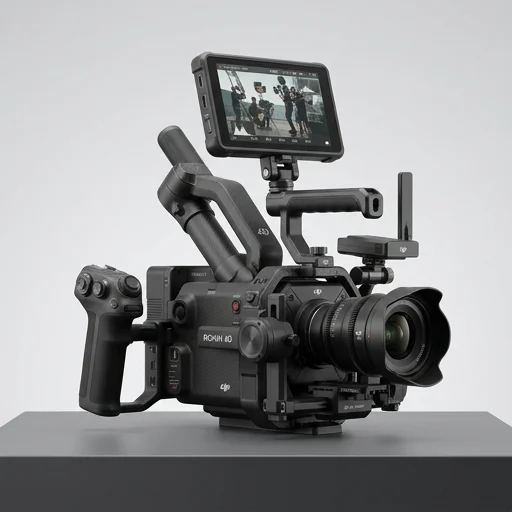
The DJI Ronin 4D is a groundbreaking cinema camera system that merges gimbal stabilization directly into the camera body, eliminating traditional rigging headaches.
Specifications
| Sensor | Full-frame X9 6K/8K CMOS |
|---|---|
| Stabilization | 4-axis integrated gimbal |
| ISO Range | Dual native ISO up to 12800 |
| Recording Resolution | 8K/75fps or 6K/60fps |
| Weight | Approx. 4.6 kg (body with gimbal) |
- Built-in 4-axis stabilization (no handheld gimbal needed)
- Integrated Zenmuse X9 full-frame 6K/8K sensor
- LiDAR Focus system for autofocus accuracy
- Dual native ISO up to 12800
- Detachable design with modular accessories
- 10-bit 3-LUT monitoring on built-in display
- Internal ND filters (X9-8K Air version)
- CineCore 3.0 processing engine
Pros
- ✓ Eliminates need for separate gimbal operator
- ✓ LiDAR autofocus performs well in low light and difficult conditions
- ✓ Exceptional dynamic range with dual native ISO sensor
- ✓ 4-axis stabilization noticeably smoother than 3-axis gimbals
- ✓ Modular ecosystem allows configuration flexibility
- ✓ High-quality integrated monitor reduces external accessory needs
Cons
- ✕ Very high price point limits accessibility
- ✕ Heavy for extended handheld operation without support rig
- ✕ Steep learning curve for new users
- ✕ Battery life shorter than expected during 8K recording
- ✕ Limited third-party lens support compared to standard cinema cameras
- ✕ Firmware updates occasionally introduce temporary bugs
We earn a small commission on qualifying purchases via AliExpress affiliate links — at no extra cost to you.
The DJI Ronin 4D represents a genuine reinvention of what a cinema camera can be, fusing a full-frame sensor, lens mount, gimbal stabilization, and even a built-in LiDAR focusing system into a single unbroken body. Rather than bolting a camera onto a handheld gimbal, DJI engineered the two as one integrated tool, eliminating the traditional gimbal arm and replacing it with a four-axis stabilization system that adds a vertical axis to the usual pan, tilt, and roll. This design choice removes the bounce and jitter that plague even well-balanced three-axis rigs, giving operators buttery smooth footage while walking, running, or moving through uneven terrain without the bulk of an external stabilizer. At the heart of the Ronin 4D lies DJI's Zenmuse X9 sensor, available in 6K and 8K variants, paired with support for Apple ProRes RAW and ProRes 422 HQ recording directly to internal SSD storage or CFexpress cards. This gives cinematographers incredible latitude in post-production, with rich dynamic range and color depth suited for high-end commercial, documentary, and narrative work. The included DL-mount system supports a growing lineup of DJI's own cinema lenses, and an adapter allows compatibility with PL and EF glass, so professionals aren't locked out of their existing lens collections. The LiDAR range-finding module mounted at the front constantly maps the scene in three dimensions, enabling the camera to achieve remarkably accurate autofocus even in low light or when subjects move erratically, a feature that traditional contrast or phase-detection systems often struggle to match. Beyond the imaging core, the Ronin 4D was built with real-world production workflows in mind. Its modular design accepts a high-bright monitor, wireless video transmission unit, and various handle configurations, allowing the same core unit to transform from a handheld gimbal into a tripod-mounted cinema camera or even a remote-operated crane setup. Power redundancy features, dual native ISO, and synchronized timecode across accessories make it a serious tool for multi-camera productions. For filmmakers and video professionals seeking to consolidate their gimbal, camera, and focus systems into one dependable, road-ready package, the DJI Ronin 4D offers a level of integration and image quality that few systems in the cinema gear space can match.
Customer reviews
Switched from a traditional cinema camera plus gimbal setup to the Ronin 4D and my workflow completely transformed. The LiDAR focus is shockingly accurate even in dim interiors, and not having to balance a gimbal separately saves me hours on set.
The 6K footage straight off the X9 sensor is gorgeous, dynamic range is excellent. My only complaint is arm fatigue after a full day of handheld shooting without a support rig or exosled.
As a one-man crew, this camera lets me get stabilized shots I never could before without hiring a gimbal op. The built-in monitor with 3D LUT support is fantastic for client previews on location.
Image quality and stabilization are top-tier, but once you start adding modular accessories and extra batteries the total cost climbs fast. Still, for narrative film work it's been reliable and versatile.